
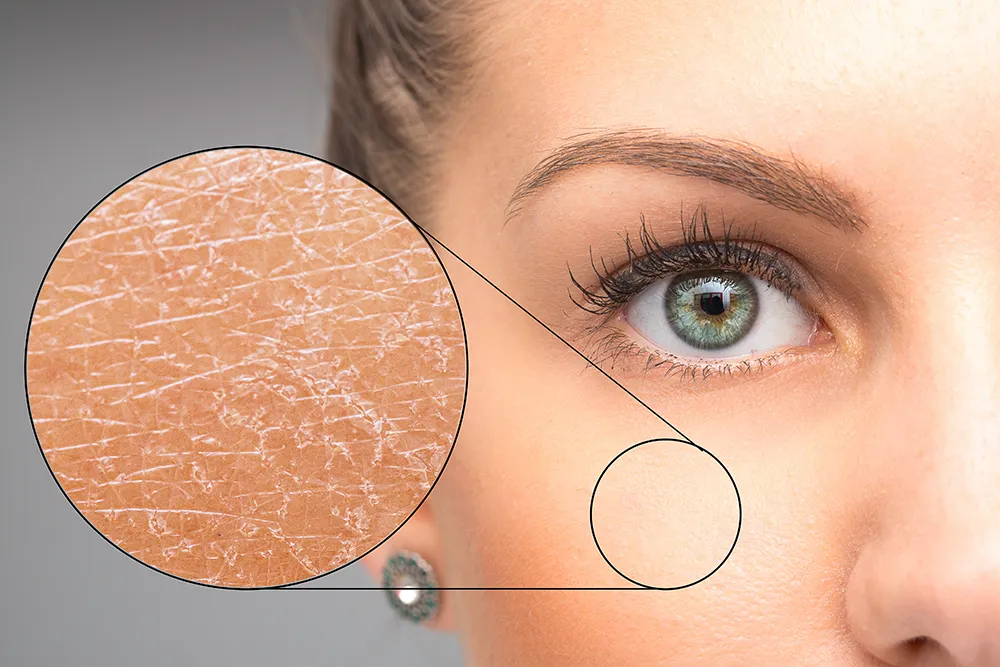
Sjogren’s syndrome is a multisystem, chronic, autoimmune disease of unknown cause.1 It frequently occurs in conjunction with other autoimmune syndromes, such as lupus or rheumatoid arthritis, in which case, it is often termed “secondary” Sjogren’s Syndrome. When presenting as a distinct illness, it is sometimes called Sjogren’s Disease or “Primary” Sjogren’s syndrome. The hallmark of the condition is inflammation of the secretory glands, such as those responsible for saliva, perspiration, and tears. As a result, dryness of the eyes and mouth – “sicca syndrome”–along with dry and itchy skin is a common prominent symptom. In addition, many other body systems may be affected, including the lungs and respiratory system, the gastrointestinal tract, joints, and nervous system. Sjogren’s often emerges insidiously, with gradual development of a host of seeming disparate symptoms that may not be recognized as being representative of a single syndrome. As such, the diagnosis is often delayed and even missed by physicians.
The condition is named after a Swedish physician, Henrik Sjogren, who first described the syndrome in 1933.
Incidence and Prevalence
Sjogren’s syndrome is not a common disorder2. The prevalence is estimated to be about 40-90 cases per 100,000 population.3 Women are affected more often than men, by a factor of 7-20. The most common presentation are women their 50’s and 60’s. Complaints of dry eye and mouth are quite common, especially in older individuals, where up to 30% of the elderly may experience sicca symptoms3. Because most cases are due to other causes, Sjogren’s is often not recognized as a more serious explanation for dry eye and mouth symptoms.
Symptoms of Sjogren’s Syndrome
One of the reasons that the diagnosis of Sjogren’s Syndrome is so challenging is that the symptoms and severity of the condition are so variable. Some patients experience mild ocular dryness and fatigue with aches and pains, while others may have disabling arthritis, respiratory , nervous or intestinal system involvement. In some instances, patients become become seriously ill, with compromising lung disease, severe neuropathy and even non-Hodgkin’s lymphoma.
Most patients with mild to moderate Sjogren’s have prominent sicca symptoms. Since dryness of the eyes and/or mouth is common, clinicians may fail to recognize that the symptoms represent a systemic disorder. Instead, the symptoms may be attributed to aging or a side effect of medication prescribed for other reasons. Indeed, a delay in diagnosis is a common problem for Sjogren’s sufferers.
Other common symptoms include:
- fatigue and low energy
- joint pans
- weakness
- dry cough
- corneal injury and keratoconjunctivitis sicca, often affecting vision
- swollen lymph nodes
- anemia and low white blood cell count
- salivary gland swelling, often with pain and tenderness
- indigestion, irritable bowel, difficulty swallowing, esophageal reflux and other gastrointestinal problems
- memory loss and brain fog
- burning or tingling pains in the extremities
- dry, itchy skin
- vaginal dryness with resulting urinary and sexual difficulties
- interstitial cystitis
- liver problems, which range from mild liver test abnormalities to chronic autoimmune hepatitis
- dental problems due to a loss of saliva, such as tooth decay and periodontitis
- loss of sense of smell and taste
- swollen glands, both lymph nodes and salivary glands
- an increase in the risk of lymphoma
Diagnosis of Sjogren’s Syndrome
The biggest challenge in diagnosing Sjogren’s Syndrome is simply considering the diagnosis! Sjogren’s Syndrome mimics many other disorders, such as fibromyalgia, chronic fatigue syndrome, symptomatic menopause, and adverse drug reactions. Moreover, sicca symptoms of dry eyes and mouth is a common complaint in older people and has many causes, other than Sjogren’s4. Consequently, doctors may not recognize the systemic and inflammatory process and attribute the patient’s complaints to other causes. Once considered, it is actually not difficult to make a diagnosis.
The diagnosis is based upon clinical features, blood tests and in some cases, biopsy of the salivary glands. Other causes for dry eyes and mouth should be excluded.
Blood tests often reveal the presence of autoantibodies. The Ro antibody ( also called SS-A) is present in about 70% of affected patients and 40% of patients have the La ( SS-B) antibody. Patients who exhibit both Ro and La antibodies tend to have more aggressive disease. Most patients will also have an antinuclear antibody ( ANA). A positive rheumatoid factor may be present, often at very high levels. In some instances, patients may also manifest anti-centromere antibodies, as well. These antibody tests can be very helpful in establishing a diagnosis but are not restricted to Sjogren’s Syndrome. Patients with systemic lupus often have Ro or La antibodies, for example. The Ro antibody is also observed in mothers of children born with neonatal lupus. Therefore, while the antibody tests are quite useful in investigating Sjogren’s Syndrome, they cannot be depended upon solely for the diagnosis. Other useful but non-specific blood tests include markers of inflammation, such as the ESR and C-Reactive protein.
When complaints of dry eyes are considered, the Schirmer test is used to measure tear production. A test strip of filter paper is placed at the lower eyelid and the amount of paper wetting is measured after 5 minutes. Less than 5mm is considered a positive test for impaired tear production. Ocular surface staining tests may be used to assess any damage to the corneal tissue. Usually, these tests are performed by ophthalmologists.
The salivary glands can also be tested . Various measurement of saliva production can establish glandular hypofunction. Ultrasonography and nuclear imaging studies (technetium scanning) may be helpful and MRI of the parotid glands ( the large salivary glands located under each cheek, in front of the ear) can detect structural abnormalities.
Biopsy of a salivary gland may be employed to confirm the diagnosis of Sjogren’s Syndrome5. Typically, a specimen is taken from the lower lip, where small salivary glands can be sampled for the presence of inflammation—infiltration of the tissue with lymphocytes. This test is positive in about 80% of Sjogren’s patients. Because it is painful, may cause persistent lip numbness and may be falsely negative, this test is not required for the diagnosis and is not often performed. It may not be required in cases where the clinical features and antibody tests are evident, but in situations where there is uncertainty such as in the 20-30% of Sjogren’s patients who do not possess autoantibodies, it may be helpful in diagnosis.
Other Conditions Often Confused with Sjogren’s Syndrome
There are a number of similar conditions, often confused with Sjogren’s Syndrome, mostly due to symptoms of sicca or glandular swelling. It is important to consider these possibilities as well.
Age-related Sicca syndrome-ocular and oral dryness is frequent among those over age 65, but there are no associated systemic symptoms and autoantibodies and markers of inflammation are absent.
Sarcoidosis-patients with this immunological disorder often have sicca symptoms and swelling of the salivary and tear glands, as well as other systemic symptoms, such as fatigue, joint pains, and respiratory problems, so there may be considerable overlap
IgG4-related disease-is a rare inflammatory condition, often affecting the secretory glands with inflammation and swelling which can cause sicca symptoms. It also affects many other body systems, and is also a system immune disorder. It can look much like Sjogren’s Syndrome, but the laboratory and biopsy features are substantially different.
Lymphoma-some type of lymphomas, or cancer of the lymphatic system and leukemias affect the salivary glands and can present with swelling due to tumor infiltration of the glands.
Sialadenitis-infections of the salivary glands, common in diabetics can present with swelling and dryness. This may also occur if a small stone obstructs one of the salivary gland ducts.
Hepatitis C and HIV-on occasion, these viral diseases may affect the salivary glands and present with swelling and sicca symptoms.
It is also important the recognize the presence of secondary Sjogren’s Syndrome in patients with other rheumatic disorders, such as lupus, rheumatoid arthritis and psoriatic arthritis. This is important because some of the treatment options, discussed below, differ and patients will benefit when associated Sjogren’s is recognized and addressed.
Treatment Approach
Sjogren’s syndrome can be very difficult to treat because there is no single therapeutic approach that can address the disease as a whole. Rather, treatments are provided according to each individual system that is affected. As a chronic condition without “cure”, patients with SS are advised to learn as much as they can about their condition and to focus on pharmacologic and non-pharmacologic treatments that can help. The Sjogren’s Foundation and the Arthritis Foundation is excellent resources for patients and there are several Facebook and similar social media groups that can be most helpful for those suffering with this most difficult syndrome.
Dryness of the eyes and mouth, while very uncomfortable, can also lead to damage to the eyes and a number of dental problems, including caries, periodontal disease, thrush, and loss of teeth. An important goal of treatment is to address and prevent these problems. As such, it is important to work with a team familiar with the management of SS. Usually, this involves a rheumatologist for overall guidance, an ophthalmologist and a dentist.
There are a number of self-care and over the counter measures to address dryness in the eyes. Artificial tear drops and moisturizers can be helpful in many cases. Products which contain sodium hyaluronidate or hydroxypropyl methyllcelluose are superior to simple saline drops6-7. Some products contain preservative, which can be irritating in some patients, so it is important to read labels. Examples of useful products include: Tears Naturale II and Free, Liquifilm Tears, Isoptotears, Bion Tears, Viscotears, HypoTears PF, Refresh, Systane, Moisture Eyes Free, and TheraTears and TearsFree. These drops must be used frequently-4 to 6 times per day.
A slow-release product such as Lacrisert is a small pellet which is placed just inside the lower eyelid and can provide hour of tear support, though some patient find this difficult to tolerate.
When the dryness is more severe, prescription drops may be used, such as Restasis ( cyclosporine) or Xidra(lifitegrast) which are immunomodulator agents that actually treat the tear gland inflammation.
It is also important to consider the environment, as pollutants and lack of adequate humidity can aggravate eye irritation. Glasses can often be protective, but contact lenses should be avoided.
For dry mouth, there are a number of saliva substitutes available, but many patients find these ineffective. Aside from frequent sipping of water, there are a number of ways to increase natural salivary flow. Sugar free sour lemon or cherry drops can be useful, as can sugarless gum, especially products containing Xylitol sweetener. Tart flavors stimulate saliva. Beverages with high acidity, such as cola drinks and many herbal teas and coffee canmake matters worse.
Dry skin and itchiness is a common problem in SS patients and can be best addressed with the use of moisturizing agents. Lac-Hydrin (ammonium lactate) is a prescription moisturizing lotion that is often useful.
When topical therapies are insufficient, secretagogues–oral medication, such as pilocarpine and cevimeline stimulate glandular secretions and can be effective.
For extraglandular symptoms, such as fatigue, joint pains, skin rashes and other organ system involvement SS is treated much like lupus or rheumatoid arthritis8. Even though there are no specific anti-rheumatic agents indicated for SS, medications such as prednisone, antimalarials ( i.e. hydroxychloroquine), methotrexate, leflunomide and other “DMARDS” ( disease modifying antirheumatic drugs) may be used with some success. In more severe cases, systemic cyclosporine, mycophenolate, or Biologic agents such as Rituximab have been employed. The TNF-inhibitors, such as etanercept and infliximab have proven disappointing9.
In addition to the use of anti-rheumatic agents to attempt to control Sjogren’s Syndrome overall, specific treatments focused on particular systems involved are often required as well. As such, the additional help of specialists is necessary.
For example, Sjogren’s patients may develop interstitial lung disease, an inflammatory condition of the lung tissue causing dry cough and shortness of breath. This can be very difficult to treat and requires the expertise of a pulmonologist. Patients with gastrointestinal involvement may experience severe GERD symptoms, difficulty swallowing, gastritis, chronic indigestion, or autoimmune hepatitis. These problems require individualized treatments, guidance from a gastroenterologist and are similar to therapeutics used for patients suffering with GI problems who do not have SS.
There are many neurologic manifestations of Sjogren’s Syndrome, such as peripheral sensory and motor neuropathies and cranial neuropathy. Central nervous system involvement may include memory and cognitive problems, optic neuritis and myelitis. Again, in these cases, the management depends upon the specific nature of the involvement, and requires the help of a neurologist.
Finding effective therapies for Sjogren’s patients has been a challenge and a disappointment. While trials are ongoing, many agents have been attempted with limited success. The importance of individualized treatment using a team of clinicians is essential.
Sjogren’s Syndrome is a challenging problem that is associated with a significant reduction in the quality of life10.
Fortunately, for most sufferers, the mortality is little different than the general population, and there are methods to manage the condition and treat symptoms fairly effectively. However, in severe cases, such as those with interstitial lung disease, kidney disease, or lymphoma, there is increased mortality.
1.Primary Sjögren’s syndrome: new clinical and therapeutic concepts.
Ramos-Casals M, Tzioufas AG, Font J
Ann Rheum Dis. 2005;64(3):347. Epub 2004 Oct 21.
2. Epidemiology of primary Sjögren’s syndrome: a systematic review and meta-analysis.
Qin B, Wang J, Yang Z, Yang M, Ma N, Huang F, Zhong R
Ann Rheum Dis. 2015;74(11):1983.
3. Incidence and Mortality of Physician-Diagnosed Primary Sjögren Syndrome: Time Trends Over a 40-Year Period in a Population-Based US Cohort.
Maciel G, Crowson CS, Matteson EL, Cornec D
Mayo Clin Proc. 2017;92(5):734.
4. Dry eye and dry mouth in the elderly: a population-based assessment.
Schein OD, Hochberg MC, Muñoz B, Tielsch JM, Bandeen-Roche K, Provost T, Anhalt GJ, West S
Arch Intern Med. 1999;159(12):1359.
5. Establishing guidelines for the role of minor salivary gland biopsy in clinical practice for Sjögren’s syndrome.
Lee M, Rutka JA, Slomovic AR, McComb J, Bailey DJ, Bookman AA
J Rheumatol. 1998;25(2):247.
6. Hydroxypropyl methylcellulose for the treatment of severe dry eye associated with Sjögren’s syndrome.
Toda I, Shinozaki N, Tsubota K
Cornea. 1996;15(2):120.
7. Double blind, randomised, placebo controlled, crossover, multicentre study to determine the efficacy of a 0.1% (w/v) sodium hyaluronate solution (Fermavisc) in the treatment of dry eye syndrome.
Condon PI, McEwen CG, Wright M, Mackintosh G, Prescott RJ, McDonald C
Br J Ophthalmol. 1999 Oct;83(10):1121-4.
8. Treatment Guidelines for Rheumatologic Manifestations of Sjogren’s Syndrome: Use of Biologic Agents, Management of Fatigue, and Inflammatory Musculoskeletal Pain
Carsons, S et.al.
Arthritis Care & Research
Vol. 69, No. 4, April 2017, pp 517–527
9. Etanercept in the treatment of patients with primary Sjögren’s syndrome: a pilot study.
Zandbelt MM, de Wilde P, van Damme P, Hoyng CB, van de Putte L, van den Hoogen F
J Rheumatol. 2004;31(1):96.
10. Influence of clinical and immunological parameters on the health-related quality of life of patients with primary Sjögren’s syndrome.
Belenguer R, Ramos-Casals M, Brito-Zerón P, del Pino J, Sentís J, AguilóS, Font J
Clin Exp Rheumatol. 2005;23(3):351.
